




[Updated August 2026]
Tool Insurance may be worth considering if replacing your tools and portable work equipment after an insured loss would create a significant cost for your business. Whether it makes sense for a particular tradie depends on the value of the equipment, how it is stored, the available cover, the policy excess and the cost your business could absorb itself.
Tool Insurance, which insurers may also refer to as General Property Insurance or Property & Tools Insurance, can help cover insured portable tools and equipment against certain events such as theft or accidental damage, depending on the policy.
This information is general only and does not take into account your objectives, financial situation or needs. Cover is subject to policy terms, conditions, limits, exclusions and insurer acceptance.
Quick Summary
- Tool Insurance may be worth considering where replacing insured tools and portable equipment after a covered loss would place a meaningful cost on the business.
- The total replacement value of a complete tool setup can matter more than the cost of any single drill, saw, tester or hand tool.
- Cover for theft can depend on where tools are stored, how they are secured and whether policy security conditions are met.
- Tool Insurance does not cover every loss, with wear and tear, poor maintenance and some forms of unattended or unsecured theft commonly restricted or excluded.
- High-Value or specialised equipment may need to be separately listed or declared, depending on the insurer and policy.
- The policy excess, insured value, storage arrangements and ability of the business to fund replacement equipment are useful factors to consider when reviewing Tool Insurance.
Is Tool Insurance Worth It?
Tool Insurance can be worth considering when the cost of replacing your work equipment would be difficult or disruptive for the business to absorb itself.
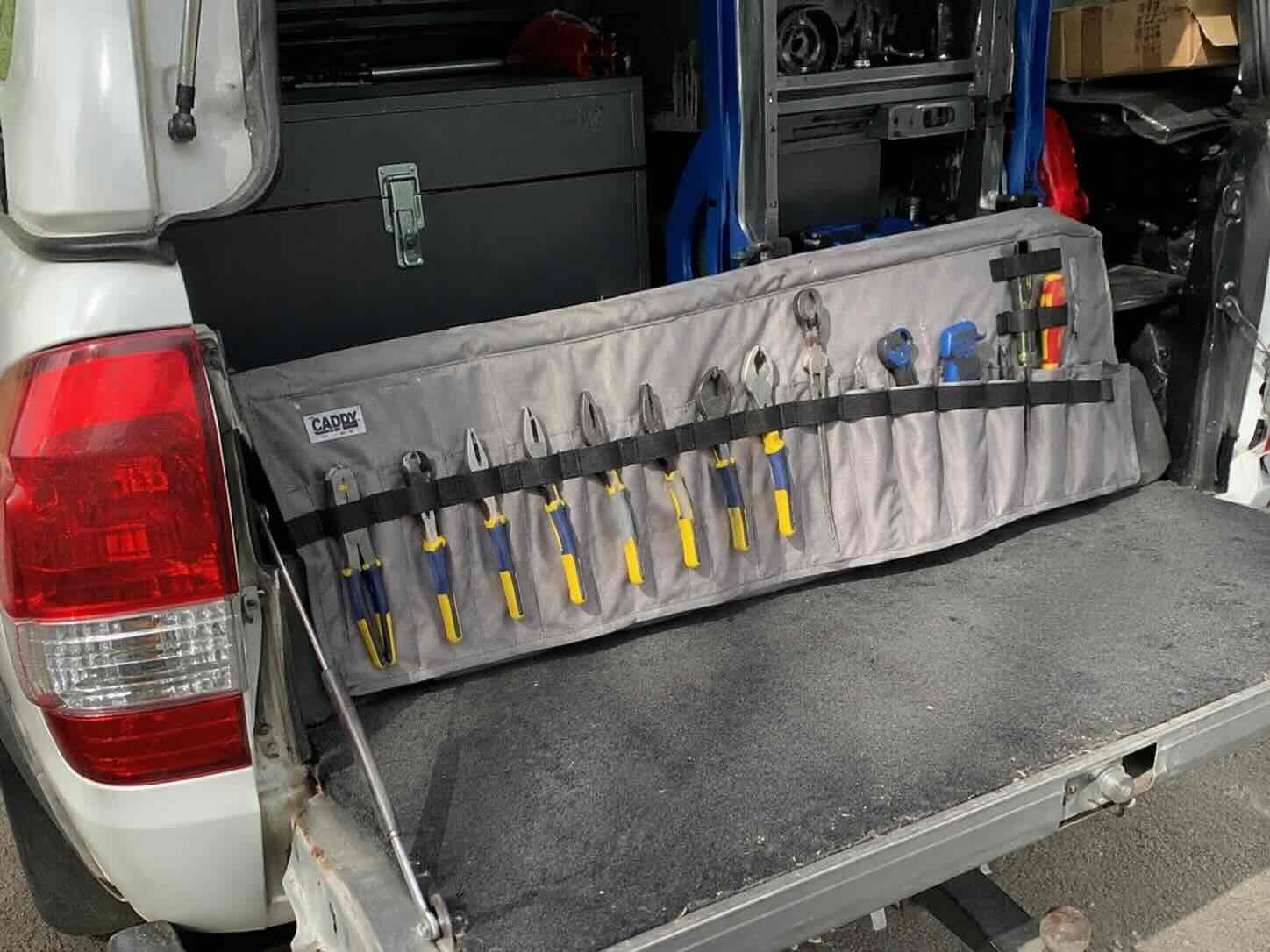
A tradie’s equipment is rarely limited to one expensive item. A work setup can include drills, saws, grinders, batteries, chargers, testing equipment, hand tools, safety equipment and other portable gear. The total replacement value can therefore be considerably higher than the value of an individual tool.
The question is not simply whether your tools could be stolen. It is whether the circumstances you are concerned about are covered by the policy and whether the potential benefit of the insurance makes sense when compared with the premium, excess, limits and conditions.
For some businesses, retaining the risk and paying to replace tools themselves may be manageable. For others, replacing a complete insured tool setup at once could place more pressure on available business funds.
What Is Tool Insurance?
Tool Insurance is a common name for insurance used to cover portable business tools and equipment. Insurers may instead refer to the cover as General Property Insurance or Property & Tools Insurance.
The policy may cover declared tools and portable equipment against certain insured events. The exact items, insured events and locations depend on the insurer and policy structure.
Examples of property that may be insured include:
- Hand tools
- Power tools
- Testing and measuring equipment
- Diagnostic equipment
- Portable trade machinery and site equipment
- Safety equipment, signage and barriers
- Laptops, tablets and portable business electronics, where included
- Tools kept in vehicles or trailers, where declared and accepted
- Hired-In or borrowed equipment, where available and included
The policy schedule and wording determine what property is actually insured. The term “Tool Insurance” by itself does not confirm that every item used by the business is covered.
For a broader definition of the cover, see our guide to Tools of Trade Insurance.
The key distinction
Tool Insurance Is a common plain-English description of cover for portable work tools and equipment. General Property Insurance is a policy term insurers may use for the cover. The policy schedule and wording, rather than the product name, determine what property and events are insured.
What Should I Consider When Deciding Whether Tool Insurance Is Worth It?
The value of the tools is only one factor. How the equipment is used and stored, the excess and the policy conditions can also affect the practical value of the cover.
Factors to check before deciding
Replacement value
Consider what it would cost to replace the complete set of tools and equipment you rely on for work.
Storage
Check whether your normal vehicle, toolbox, workshop or site storage arrangements meet the policy conditions.
Policy excess
Compare the applicable excess with the value of the items and types of losses you want to insure.
High-Value equipment
Check whether expensive or specialised equipment needs to be individually listed or separately declared.
Where you work
Review whether the cover applies while equipment is at worksites, in vehicles, in transit or at other declared locations.
Your ability to replace the gear
Consider how your business would fund replacement equipment if an uninsured or uncovered loss occurred.
How Does Tool Insurance Compare with Paying for Replacement Tools Yourself?
One way to consider Tool Insurance is to compare transferring some eligible risks to an insurer with retaining those risks within the business.
Choosing not to insure a particular exposure means the business generally retains the financial cost if the equipment is lost or damaged and no other insurance responds.
This comparison is general only. It does not mean Tool Insurance will be suitable for every business or that a particular loss will be covered. Cover depends on the policy terms, conditions, limits, exclusions and insurer assessment.
Why Can the Total Value of Your Tools Matter?
The value of a complete working setup can be easy to underestimate when equipment has been purchased over several years.
A carpenter may own several power tools, batteries, chargers, nail guns and hand tools. An electrician may carry testers, meters, cable tools and specialised electrical equipment. A plumber may rely on power tools, pipe equipment, diagnostic devices and hand tools.
Rather than estimating from memory, a useful insurance review involves making an inventory of the portable equipment used by the business and considering its current replacement value.
Receipts, serial numbers, photographs and equipment records can also help identify what the business owns. The evidence required for a claim depends on the insurer and policy.
Does Tool Insurance Cover Theft from a Ute?
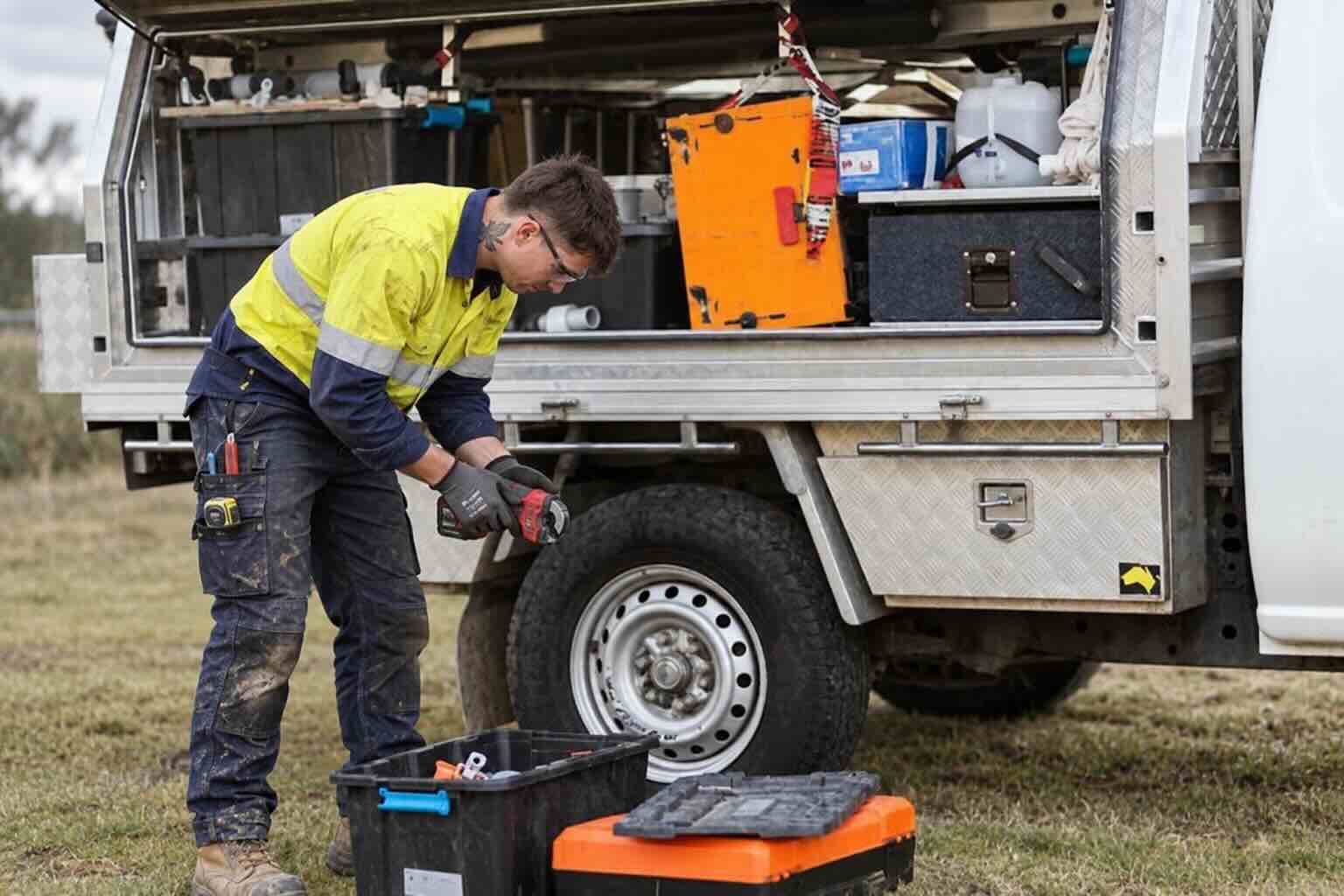
Tools kept in a ute may be covered where the policy includes the property and the relevant vehicle-storage and security conditions are met.
Cover should not be assumed simply because the tools were inside a vehicle.
Depending on the policy, an insurer may apply conditions relating to:
- Whether the vehicle was locked
- Whether tools were kept in a locked toolbox or secured compartment
- Whether there is evidence of forcible entry
- Where the vehicle was parked
- Whether theft occurred overnight
- Whether the vehicle or equipment was unattended
- Whether the items were visible or stored in the open air
The actual theft conditions should be checked before relying on the policy for tools regularly left in a ute or work vehicle.
Does Tool Insurance Cover Tools Left on a Worksite?
Tool Insurance may cover insured property at a worksite where the location and storage arrangements fall within the policy terms.
However, leaving equipment unattended at a construction site, civil project or other work location can be treated differently from keeping it in secured storage.
Some policies restrict or exclude unattended equipment or theft without forcible entry. If tools regularly remain on site overnight, that arrangement should be discussed when the cover is being arranged or reviewed.
What Events May Tool Insurance Cover?
The insured events depend on the policy, but Tool Insurance may cover declared tools and portable equipment against certain events including:
- Theft, where the applicable security conditions are met
- Fire damage
- Storm damage, where covered
- Accidental damage to insured equipment
- Loss of insured property in circumstances covered by the policy
- Equipment in transit or at worksites, where included
Every insurer does not provide the same cover. The insured events, locations and property definitions should be checked against the policy being considered.
What May Not Be Covered by Tool Insurance?
Tool Insurance does not cover every type of tool damage or disappearance.
Common areas that may be excluded or restricted include:
- Wear and tear or gradual deterioration
- Rust, corrosion or other gradual damage
- Poor maintenance or neglect
- Mechanical or electrical breakdown unless separately covered
- Intentional or deliberate damage
- Tools left unsecured or in the open air
- Theft from unattended vehicles where security conditions have not been met
- Property or locations not declared where declaration is required
- Items exceeding policy limits that have not been separately listed where required
This is not a complete list of exclusions. The applicable Product Disclosure Statement, policy schedule and wording should be checked for the insurance being arranged.
Are Expensive Individual Tools Automatically Covered?
No. A policy can apply limits to individual items or require higher-value equipment to be separately specified.
There is no single item-value threshold that should be assumed to apply across every Tool Insurance policy. The limit depends on the insurer and policy.
If the business owns specialised or expensive equipment, check whether the equipment needs to be listed individually and whether its insured value reflects the required basis of cover.
Are Employee or Apprentice Tools Covered?
Tools owned by employees or apprentices should not be assumed to be covered under the business’s Tool Insurance.
Whether employee-owned property can be insured depends on the policy definition of insured property, ownership requirements and any extensions offered by the insurer.
If workers regularly bring their own equipment to the workshop or worksite, the arrangement should be checked with the insurer or broker rather than assuming those items form part of the business’s insured property.
Does Tool Insurance Cover Lost Income if I Cannot Work?
Tool Insurance generally focuses on insured property rather than automatically covering lost income simply because tools are unavailable.
An insured tools claim may help with eligible repair or replacement costs, which may assist the business in restoring its equipment. That does not mean lost revenue, missed jobs or contractual losses are automatically covered.
Business Interruption Insurance is a different type of cover and generally requires interruption to result from an insured event under the relevant arrangement. Its application depends on the policy structure.
When Might Tool Insurance Be Worth Reviewing?
A Tool Insurance policy may need to be reviewed when the equipment, storage arrangements or way the business operates changes.
Review your Tool Insurance when you:
Changes to your equipment or storage arrangements may affect the information your broker or insurer needs.
Buy expensive new tools or specialised equipment.
Increase the number of tool kits used by your crews.
Change where tools are stored overnight.
Start leaving equipment at project sites.
Begin hiring, borrowing or leasing equipment.
Realise your existing sum insured no longer reflects your equipment.
A change does not automatically mean additional insurance is required. The equipment, values, locations and existing policy should be reviewed against the applicable policy terms, conditions, limits and exclusions.
How Should I Work Out How Much Tool Insurance to Consider?
Start by identifying the tools and portable equipment the business would want insured and estimating the relevant replacement values.
A practical equipment inventory can record:
- Tool or equipment description
- Brand and model
- Serial number
- Purchase date
- Receipt or other ownership records where available
- Current replacement value
- Normal storage location
- Whether an item is owned, hired, leased or borrowed
Once the equipment has been identified, the proposed sum insured, individual item limits, excesses and storage conditions can be compared with the policy options available.
Is Tool Insurance Worth It for a Sole Trader?
Operating as a sole trader does not automatically determine whether Tool Insurance will be worthwhile.
A sole trader who relies on a relatively small number of valuable tools may have a different exposure from a contractor operating several crews with multiple tool kits.
Factors such as equipment value, business cash reserves, storage arrangements and how quickly replacement equipment would be needed can be considered alongside the premium and policy terms.
Is Tool Insurance Worth It if My Tools Are Old?
The age of your tools is one factor to consider, but it does not answer the question by itself.
The applicable basis of settlement should be checked because policies can differ in how insured property is valued following a covered loss. The age, condition and replacement value of the equipment may be relevant.
Do not assume that a policy will automatically replace an older item with a new equivalent. The settlement basis comes from the relevant policy wording.
What About Tools Worth Less Than the Policy Excess?
The excess is worth considering when assessing the practical value of Tool Insurance for lower-value losses.
If the value of a loss is below or close to the applicable excess, there may be little or no amount payable under the policy for that particular event.
However, the relevant comparison should generally consider the complete insured equipment exposure rather than focusing only on the cheapest individual tools.
How We May Be Able to Help with Tool Insurance
All Trades Cover is a specialist insurance brokerage for trades, construction, mining and heavy industry businesses.
Depending on the business, equipment and insurer requirements, All Trades Cover may be able to help with:
- Reviewing the types and values of tools and portable equipment to be insured
- Comparing available Property & Tools Insurance options
- Checking vehicle, overnight and worksite storage conditions
- Identifying equipment that may need to be separately listed or declared
- Reviewing hired-in or borrowed equipment requirements where relevant
- Updating the insurance arrangement when equipment or storage locations change
- Supporting clients through the claims process
Available cover depends on the business activities, equipment, storage arrangements, selected policy and insurer acceptance.
Learn more about Property & Tools Insurance Or request a quote from All Trades Cover.
Frequently Asked Questions
Is Tool Insurance Worth Having?
Tool Insurance may be worth considering if replacing your insured tools and portable equipment after a covered loss would create a significant cost for your business. The premium, excess, equipment values, storage arrangements, exclusions and ability to fund replacement gear should all be considered.
What Does Tool Insurance Cover?
Tool Insurance may cover declared tools and portable equipment against insured events such as theft, fire, storm or accidental damage. The specific items, events and locations covered depend on the policy.
Does Tool Insurance Cover Stolen Tools?
Tool Insurance may cover theft of insured tools where the circumstances meet the policy requirements. Conditions can apply to locked vehicles, toolboxes, unattended equipment, overnight storage and evidence of forcible entry.
Does Tool Insurance Cover Tools Left in My Ute Overnight?
It may, depending on the policy and storage conditions. Overnight vehicle theft can be restricted or subject to security requirements, so the policy wording should be checked before assuming tools left in a ute are covered.
Does Tool Insurance Cover Tools Left on Site?
Tools at a worksite may be covered where the location and storage arrangements fall within the policy terms. Unattended, unsecured or overnight equipment can be subject to additional restrictions or exclusions.
Does Tool Insurance Cover Accidental Damage?
Some Tool Insurance policies may cover accidental damage to insured tools and portable equipment. The insured events and exclusions differ between policies.
Are Employee Tools Covered Under My Tool Insurance?
Employee or apprentice-owned tools should not be assumed to be covered. The policy’s insured-property definition and ownership requirements should be checked to determine whether employee-owned items can be included.
Do Expensive Tools Need to Be Listed Separately?
They may. Some policies apply individual item limits or require higher-value equipment to be specified. The applicable item limits should be checked rather than assuming one threshold applies across all insurers.
Does Tool Insurance Replace Old Tools with New Ones?
Not automatically. How an insurer settles an accepted claim depends on the policy’s valuation and settlement provisions, as well as the age and condition of the insured property where relevant.
Is Tool Insurance the Same as General Property Insurance?
Tool Insurance is often a plain-English name for General Property Insurance when it is used for portable work tools and equipment. Policy names vary between insurers, so the schedule and wording determine the actual cover.
How Much Tool Insurance Should I Consider?
The amount to consider depends on the tools and portable equipment the business wants insured and the applicable policy limits. Creating an equipment inventory and reviewing current replacement values can provide a more reliable starting point than estimating the value from memory.
This information is general only and does not take into account your objectives, financial situation or needs. Cover is subject to policy terms, conditions, limits, exclusions and insurer acceptance.
![How Much Does Public Liability Cost for a Sole Trader? [Tradie Guide]](https://www.alltradescover.com.au/wp-content/uploads/2026/07/public-liability-cost-sole-trader.jpg)





























![What Insurance Does a Sole Trader Need? [Guide for Tradies]](https://www.alltradescover.com.au/wp-content/uploads/2020/06/what-insurance-does-sole-trader-need.jpg)