




If you’re a tradie running your business through a family trust, you’ve probably heard the noise:
“The ATO is coming for you.”
Let’s clear one thing up straight away.
The $10,000 figure being discussed is not necessarily a surprise ATO bill. In many cases, it refers to the cost some business owners may face to get advice, restructure their business, or change how their setup works if the proposed trust tax changes go ahead.
For many business owners, that may only be the first cost to consider.
What’s Actually Changing?
The Federal Government has proposed a major change to discretionary trusts, often referred to as family trusts.
From 1 July 2028, family trusts may be subject to a 30% minimum tax, if the proposed rules become law.
For tradies earning around $250,000 and using a trust to split income with a lower-earning spouse, this could be a big deal.
That strategy has been common for years. But under the proposed changes, it may become less tax-effective for some business owners.
The result? Some households may be looking at an extra $18,000 to $19,000 in tax each year if they do nothing, depending on their circumstances.
Why Tradies Are Rethinking Everything
Because of this proposed change, many trade business owners are now weighing up whether to:
- Wear the extra tax,
- Employ their partner or another family member,
- Restructure into a company;
- Get advice on a different setup.
This is where the $10,000 figure comes in.
Restructuring into a company can involve accounting, legal and setup costs. Depending on the business, those costs may typically sit around $10,000 to $15,000.
It is not the same as receiving a tax bill, but it can still be a real cost of adapting to new rules.
The Hidden Trap: “I’ll Just Put My Partner On The Books”
One of the most common reactions we hear is:
“I’ll just employ my partner and keep things the same.”
On paper, it sounds simple.
In reality, it may create extra costs and obligations that business owners do not always factor in.
Here’s why:
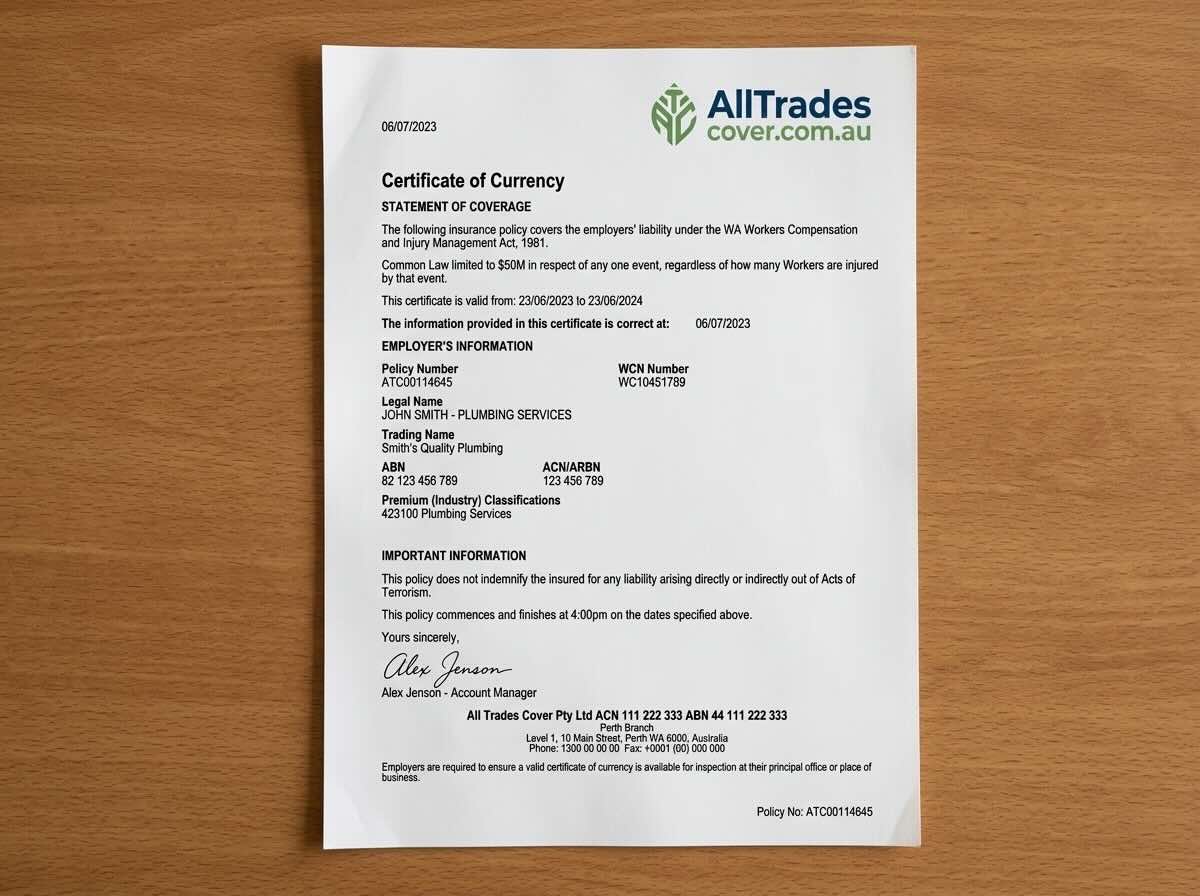
- Workers Compensation premiums in trades can be based on industry risk, not just the employee’s day-to-day role.
- Even if your partner is mainly doing admin, you should check how that role is treated before assuming the cost will be minor.
- On a $125,000 salary, workers compensation alone could be roughly $7,500, depending on the business, industry classification and state or territory.
- Add superannuation (11.5%), payroll obligations and admin costs, and the total employment cost could reach around $23,000 to $28,000 per year.
In some cases, that may reduce, or even outweigh, the tax benefit you were trying to achieve.
Where Most Tradies Get Caught Out
What we often see is business owners making fast decisions based purely on tax advice without considering the flow-on effects.
This is where problems start.
Because when you:
- Change your business structure,
- Add employees, even family members,
- Increase wages,
- Change who works in the business;
- Move from a trust to a company.
You may also be changing your insurance exposure.
That can impact:
- Workers compensation requirements,
- Public liability and business insurance structures,
- Personal coverage types,
- Management liability or employment-related exposures;
- Whether the correct entity is named on your policies.
We have had conversations with tradies who made changes first and only later realised their insurance no longer matched the way the business was operating.
Before You Make a Move
This is not just about tax anymore.
It is about understanding the full cost of every option, including the upfront costs, ongoing costs and hidden costs.
If you are considering:
- Moving away from a family trust,
- Employing your partner,
- Restructuring your trade business,
- Changing wages or business ownership;
- Adding staff or family members to the business.
Make sure you are not solving one problem while creating another.
Check The Insurance Impacts Before Making Changes
At All Trades Cover, we work with tradies across Australia who are reviewing their business setup, adding staff, changing structures or trying to understand what their insurance should look like as their business grows.
Before you make changes, speak with your accountant, tax adviser and insurance broker so you can understand the full cost, not just the tax outcome.
Right now, it is not just about adapting to proposed tax rules. It is about making sure your business is built to handle what comes next.
Disclaimer
This article provides general information only and does not take into account your objectives, financial situation or needs. It is not tax, legal, financial or personal advice. The figures used in this article are illustrative examples only and may not apply to your business. You should speak with a qualified accountant, tax adviser or lawyer before making decisions about your business structure, tax arrangements, employment arrangements or payroll obligations.
Insurance information is general in nature. Before acting on it, consider whether it is appropriate for your circumstances and read the relevant Product Disclosure Statement and policy wording. All Trades Cover can assist with general insurance advice and insurance placement, but does not provide tax or legal advice.