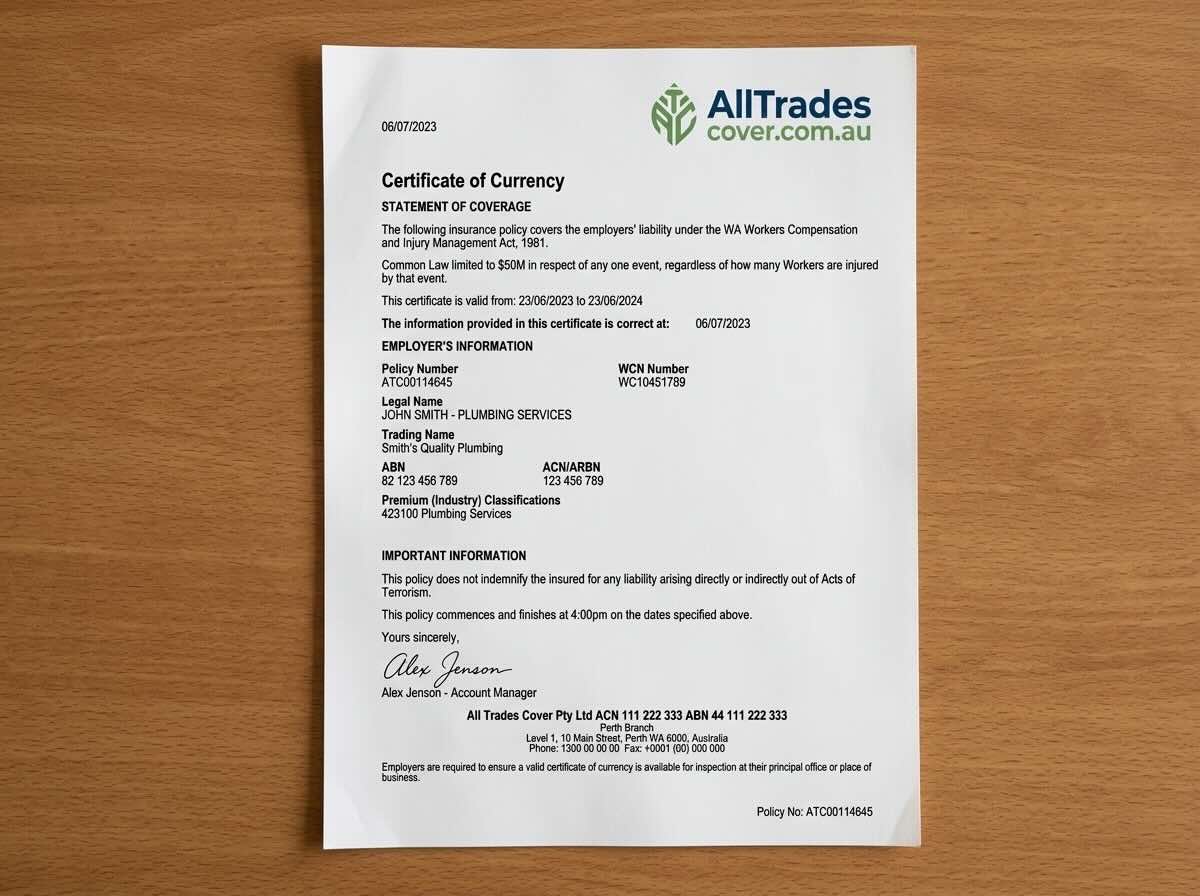





Personal Accident Insurance is a type of cover that may provide a weekly benefit if an insured accidental injury leaves you unable to work. Illness cover can often be added, depending on the policy selected.
The cover is commonly used by sole traders, subcontractors, tradies and working business owners who rely on their own ability to earn an income and do not receive paid sick leave. Cover is subject to policy terms, conditions, limits, exclusions, waiting periods and insurer acceptance.
Quick summary
- Personal Accident Insurance may pay a weekly benefit if an insured accidental injury prevents you from working.
- Illness cover is often optional and must generally be selected when the policy is arranged.
- The cover is commonly used by sole traders, subcontractors and business owners who do not receive paid sick leave.
- A waiting period must usually pass before weekly benefits may begin.
- Payments may continue until you return to work or reach the selected benefit period, subject to an accepted claim and ongoing policy conditions.
- Personal Accident Insurance is not a replacement for Workers Compensation Insurance, private health insurance or every form of income protection.
- Personal Accident Insurance is not generally required by Australian law, although a contract may require certain cover.
What Does Personal Accident Insurance Mean?
Personal Accident Insurance focuses on income continuity. It may provide regular payments when an insured accidental injury means you cannot perform your normal work duties.
The cover is not designed to insure your tools, vehicles, completed work or liability to other people. Those risks may need to be considered under separate policies such as Property and Tools Insurance, Commercial Vehicle Insurance or Public Liability Insurance.
Personal Accident Insurance is often called Personal Accident and Illness Insurance or accident and sickness insurance when optional illness cover is included.
What Does Personal Accident Insurance Cover?
Personal Accident Insurance commonly includes a weekly benefit for an insured accidental injury that prevents you from working. The exact benefits vary between insurers and policies.
Weekly Income Benefits
A weekly benefit may be payable if an insured injury leaves you unable to perform your normal occupation. The amount is selected when the policy is arranged and remains subject to the applicable policy limit, income requirements and insurer acceptance.
All Trades Cover’s current product information lists weekly benefit options that commonly range from $500 to $3,000. The amount available to an applicant depends on their income, occupation, selected cover and insurer requirements.
Optional Illness Cover
Accidental injury is generally the core cover. Illness cover is often optional and must usually be selected when arranging the policy.
Where illness cover is included, the policy may respond to certain illnesses that prevent you from working. Longer waiting periods and additional exclusions may apply to illness claims.
Defined Waiting and Benefit Periods
A waiting period is the time you must remain unable to work before a weekly benefit may begin. A benefit period is the maximum period for which benefits may be payable for an accepted claim.
A waiting period of around 14 days is commonly available for injury claims. Some illness claims may have a waiting period of around 30 days. These periods vary according to the policy and options selected.
Benefit periods may range from several months to two years, depending on the policy, insurer, applicant’s age and selected cover.
Optional Capital Benefits
Some policies may include or offer optional lump sum benefits for accidental death or permanent disablement. These are sometimes called capital benefits.
Capital benefits are separate from weekly income payments and only apply where included and where the relevant policy definition is met.
Optional Business Expense Benefits
Certain policies may offer cover for selected ongoing business expenses. This may help a working business owner manage some business costs while temporarily unable to work.
Business expense cover is not included under every policy. The expenses, limits and eligibility requirements should be checked before arranging cover.
Cover Outside Work Hours
Many Personal Accident Insurance policies can provide 24-hour cover. Where 24-hour cover is included, an insured event may occur at work, at home or during an activity outside normal working hours.
Some activities, occupations or locations may be restricted or excluded. Worldwide cover may also be available under some policies, subject to residency requirements and policy conditions.
How Does Personal Accident Insurance Work?
Personal Accident Insurance works through a claims assessment process. A payment does not begin automatically simply because you are injured or become ill.
You first select your weekly benefit, waiting period, benefit period and optional cover. If an insured event later prevents you from working, you notify the insurer or broker and provide the required supporting information.
How a Personal Accident Insurance claim generally works
STEP 1
Select your cover
Choose the weekly benefit, waiting period, benefit period and any optional illness or capital benefits.
STEP 2
An insured event occurs
An accidental injury occurs, or an illness prevents you from working where illness cover is included.
STEP 3
The waiting period applies
You must remain unable to work for the applicable waiting period before benefits may begin.
STEP 4
The insurer assesses the claim
Medical evidence, income information and the circumstances of the event are reviewed against the policy wording.
STEP 5
Benefits may be paid
If the claim is accepted, payments may continue while you remain eligible, until you return to work or reach the benefit-period limit.
Claims are assessed by the insurer. Payments depend on the policy wording, supporting evidence, waiting period, benefit limits, exclusions and continued claim eligibility.
Who Is Personal Accident Insurance Commonly Used By?
Personal Accident Insurance is commonly used by people whose income depends directly on their ability to work and who do not receive paid sick leave.
Sole Traders
A sole trader may not have an employer providing sick leave or Workers Compensation Insurance for the sole trader personally. Personal Accident and Illness Insurance may provide an alternative form of income support for insured events.
The cover may be relevant for self-employed carpenters, electricians, plumbers, landscapers and other working trade business owners.
Subcontractors
A subcontractor is not automatically covered under a principal contractor’s Workers Compensation Insurance policy. The legal treatment of a contractor or worker depends on the applicable legislation and working arrangement.
Personal Accident Insurance is commonly considered by subcontractors who are not entitled to paid sick leave or Workers Compensation Insurance for themselves.
Working Business Owners
A business owner who works in the day-to-day operation may lose personal income when an injury or illness prevents them from working. Their absence may also affect quoting, supervision, production and business cash flow.
Optional business expense cover may be relevant to some owners, subject to the policy selected.
Contractors in Physically Demanding Occupations
Tradies, earthmoving contractors, plant operators and mining contractors may perform work where an injury could prevent them from carrying out their normal duties.
Personal Accident Insurance can be considered alongside broader cover such as earthmoving and excavation insurance, Plant and Machinery Insurance or Mining Contractors Insurance. Each policy addresses different risks.
How Is Personal Accident Insurance Different From Other Cover?
Personal Accident Insurance is often confused with Workers Compensation Insurance, private health insurance and income protection. Each type of cover has a different purpose.
This comparison is general only. Definitions, eligibility, benefits and exclusions vary. All Trades Cover can only offer Workers Compensation Insurance in Western Australia due to licensing restrictions.
For a closer comparison, read our guide to Personal Accident Insurance versus Workers Compensation Insurance.
Is Personal Accident Insurance Compulsory in Australia?
Personal Accident Insurance is not generally required by law in any Australian state or territory. It is optional cover.
A principal contractor, client or project agreement may still require a contractor to hold Personal Accident Insurance. In that situation, the requirement comes from the contract rather than a general legal obligation.
A policy should not be assumed to meet every contract or site-access requirement. Check the required benefit amount, cover period, occupation, territory, endorsements and evidence of cover against the contract.
What Does Personal Accident Insurance Not Cover?
Personal Accident Insurance does not cover every injury, illness or expense. Exclusions vary, but policies commonly exclude or restrict the following:
- Pre-existing injuries, illnesses or medical conditions.
- Pregnancy, childbirth and related conditions.
- Mental illness, stress-related conditions or psychological disorders, unless specifically included.
- Intentional self-inflicted injury or suicide.
- Claims arising from alcohol, non-prescribed drugs or illegal substances.
- Injuries connected with criminal or unlawful activity.
- Professional sport and certain high-risk activities, unless disclosed and accepted by the insurer.
- Claims that should be handled under an applicable Workers Compensation Insurance scheme.
- Hospital, medical and treatment costs that fall outside any limited policy benefit.
- An illness where optional illness cover was not selected.
An exclusion does not apply in exactly the same way under every policy. Read the Product Disclosure Statement and policy wording before arranging cover.

How Much Does Personal Accident Insurance Cost?
The cost of Personal Accident Insurance depends on the cover selected and how the insurer assesses the applicant’s work and risk profile. A useful price cannot be determined from occupation alone.
Factors an insurer may consider
Occupation and work activities
The physical demands and risks associated with your normal duties may affect the insurer’s assessment.
Weekly benefit amount
Selecting a higher weekly benefit changes the amount the insurer may need to pay for an accepted claim.
Benefit period
A longer maximum payment period may affect the available policy options and premium.
Waiting period
The selected period before benefits may begin forms part of the insurer’s assessment.
Optional cover
Adding illness, capital benefits or eligible business expenses may change the premium.
Age and income
Age limits, earnings and the amount of income being insured can affect eligibility and available benefits.
Business profile
Business structure, turnover and the applicant’s role may be considered where relevant.
Claims history
Previous claims may form part of the insurer’s underwriting assessment.
Premiums depend on the insurer’s assessment. Cover is subject to policy terms, conditions, limits, exclusions and insurer acceptance.
How Much Personal Accident Cover Should You Select?
The weekly benefit should be considered against your income, essential personal expenses and the amount of time you could manage without working. It should not simply be based on the highest amount available.
Expenses you may consider include:
- Mortgage or rent payments.
- Food, utilities and household expenses.
- Vehicle repayments and transport costs.
- Existing insurance premiums.
- Business costs that continue while you are not working.
- Any savings or other income available during the waiting period.
The insurer may require proof of income when assessing an application or claim. The benefit selected may also be limited by earnings and the policy terms.
Examples of When Personal Accident Insurance May Respond
The following examples are hypothetical. They show the general purpose of the cover and do not indicate that a particular claim would be accepted.
A Carpenter Injures a Wrist Outside Work
A self-employed carpenter fractures a wrist during a weekend activity and cannot safely use tools or complete normal site duties.
Where the policy includes 24-hour accidental injury cover, the carpenter may be able to submit a claim. Weekly benefits would only be payable if the event meets the policy terms, the waiting period is completed and the insurer accepts the claim.
A Subcontractor Injures a Back on Site
A subcontractor strains their back while moving materials and is medically unable to return to their normal duties.
The first step is to establish whether the injury should be handled under an applicable Workers Compensation Insurance arrangement. Personal Accident Insurance does not replace a valid Workers Compensation Insurance claim.
Where the event falls within the Personal Accident Insurance policy instead, a weekly benefit may be available following assessment.
A Working Business Owner Becomes Ill
A business owner who works directly in the business becomes ill and cannot work for several weeks.
An injury-only policy would not generally respond to an illness. Where optional illness cover is included and the condition is not excluded, the owner may be able to claim after the applicable illness waiting period.
How Do You Make a Personal Accident Insurance Claim?
Notify your insurer or broker as soon as reasonably possible after an injury or illness prevents you from working. Early notification allows the insurer to explain the forms and supporting evidence required.
You may be asked to provide:
- A completed claim form.
- A medical certificate or report confirming your condition.
- Details of your normal duties and current work restrictions.
- Tax returns, financial statements or other proof of income.
- Information about how and when the injury or illness occurred.
- Updated medical evidence during a longer claim.
The insurer assesses the claim against the policy wording. The assessment may include whether the event is insured, whether an exclusion applies, whether the waiting period has been met and whether the claimant remains unable to perform the relevant work duties.
All Trades Cover can support clients through the claims process, including helping organise insurer paperwork and income information. The insurer controls the assessment and final claim outcome.
When Should You Review Personal Accident Insurance?
Personal Accident Insurance should be reviewed when your income, work or financial commitments change. A policy arranged several years ago may no longer reflect your current circumstances.
Review your cover when you:
Changes to your work, income or personal commitments may affect the benefit amount and policy options that are relevant to you.
Move into a different occupation or begin higher-risk work.
Experience a material increase or decrease in income.
Take on a contract with new insurance conditions.
Change from employment to sole trading or subcontracting.
Take on larger mortgage, rent or household commitments.
Need to add or remove optional illness cover.
Reach an age that may affect available benefit periods.
Change your business structure or day-to-day role.
A change does not automatically mean different cover is required. Review your circumstances against the policy terms, conditions, limits, exclusions and insurer requirements.
How to Arrange Personal Accident and Illness Insurance
Personal Accident and Illness Insurance can usually be arranged by providing details about your occupation, income and the level of cover you want considered.
Before proceeding, review:
- Whether you need accidental injury cover only or injury and illness cover.
- The weekly benefit amount.
- The waiting period.
- The maximum benefit period.
- Any optional capital or business expense benefits.
- Whether cover applies 24 hours a day.
- Occupation, age and income eligibility requirements.
- Pre-existing condition and activity exclusions.
- The evidence that may be required during a claim.
Once an application is accepted and cover is arranged, policy documents can be issued in line with insurer requirements.

Speak With All Trades Cover
All Trades Cover is a specialist insurance brokerage for Australian tradies, contractors and businesses operating across trades, construction, mining and heavy industry.
Our brokers can help you compare available Personal Accident and Illness Insurance options, understand waiting and benefit periods, and review the policy terms before you decide whether to proceed.
All Trades Cover can also support clients through the claims process. Claim acceptance and payment decisions remain with the insurer.
Learn more about Personal Accident and Illness Insurance, contact All Trades Cover or request a quote.
General Advice Warning: This information is general only and does not take into account your objectives, financial situation or needs. Before acting on this information, consider whether it is appropriate for your circumstances and review the applicable Product Disclosure Statement, Financial Services Guide and policy wording. Cover is subject to policy terms, conditions, limits, exclusions and insurer acceptance.
Frequently Asked Questions
What is Personal Accident Insurance?
Personal Accident Insurance may provide a weekly benefit if an insured accidental injury prevents you from working. Optional illness and lump sum benefits may also be available, depending on the policy selected.
Is Personal Accident Insurance the same as accident and sickness insurance?
Accident and sickness insurance is another name commonly used for Personal Accident and Illness Insurance. The term usually refers to cover for accidental injury and certain illnesses where illness cover has been selected.
Is Personal Accident Insurance compulsory?
No. Personal Accident Insurance is not generally required by Australian law. A client, principal contractor or project agreement may still request it as a condition of engagement.
Does Personal Accident Insurance cover illness?
Illness cover is often optional. A policy may respond to certain illnesses where the option was selected, the condition is not excluded and the insurer accepts the claim.
Can Personal Accident Insurance cover an injury outside work?
It may. Many policies offer 24-hour cover for insured events occurring at work or outside work. Check whether 24-hour cover is included and whether any activity exclusion applies.
How long is the waiting period?
A waiting period of around 14 days is commonly available for injury claims. Illness claims may have a longer period, such as around 30 days. The applicable period depends on the policy selected.
How long can weekly benefits continue?
Benefits may continue while you remain eligible until you return to work or reach the selected benefit-period limit. Available benefit periods may range from several months to two years, depending on the policy, insurer and your age.
How much can Personal Accident Insurance pay each week?
The weekly benefit is selected when arranging the policy and remains subject to income, policy limits and insurer acceptance. All Trades Cover’s current product information lists options commonly ranging from $500 to $3,000 per week.
Does Personal Accident Insurance cover medical bills?
Personal Accident Insurance is generally designed to replace income rather than pay hospital and medical treatment costs. Limited rehabilitation or related benefits may be available under some policies, but it does not replace private health insurance.
Do I need a medical examination to apply?
All Trades Cover’s current product information states that an application can generally be made without a medical examination. Applicants must still answer underwriting questions accurately and disclose requested medical information.
Can I arrange cover while receiving Workers Compensation benefits?
Generally, an applicant must be actively working and earning income when Personal Accident Insurance begins. A person who is already unable to work or receiving Workers Compensation benefits may not be eligible until they have returned to work, subject to insurer requirements.
Is Personal Accident Insurance tax deductible?
Premiums may be deductible where the policy is held to protect assessable income. Tax treatment depends on your individual circumstances, so confirm the position with your accountant or registered tax adviser.
Is Personal Accident Insurance the same as Workers Compensation Insurance?
No. Workers Compensation Insurance applies under state and territory schemes to eligible employees and other covered workers. Personal Accident Insurance is optional cover commonly used by sole traders, subcontractors and working business owners.
All Trades Cover can only offer Workers Compensation Insurance in Western Australia due to licensing restrictions.
Can Personal Accident Insurance be arranged with other trade insurance?
Yes. Personal Accident Insurance can generally be considered alongside Public Liability Insurance, Property and Tools Insurance, Commercial Vehicle Insurance and other business cover. Each policy addresses different risks and remains subject to its own terms, conditions, limits and exclusions.
Does Personal Accident Insurance cover pre-existing conditions?
Pre-existing injuries, illnesses and medical conditions are commonly excluded. The applicable definition and disclosure requirements should be checked in the policy wording before cover is arranged.
How do I make a claim?
Notify your insurer or broker and provide the required claim form, medical evidence and proof of income. The insurer will assess the claim against the policy wording, waiting period, exclusions and benefit limits.

![How Much Does Public Liability Cost for a Sole Trader? [Tradie Guide]](https://www.alltradescover.com.au/wp-content/uploads/2026/07/public-liability-cost-sole-trader.jpg)



































![What Insurance Does a Sole Trader Need? [Guide for Tradies]](https://www.alltradescover.com.au/wp-content/uploads/2020/06/what-insurance-does-sole-trader-need.jpg)