



Updated October 2026
Monthly Public Liability Insurance payments may be available if you would prefer to spread your insurance cost across the year instead of paying the full premium upfront. The payment arrangement depends on the insurer, policy type and whether a premium funding provider is involved.
For many tradies, contractors and small businesses, monthly payments can make regular business expenses easier to plan. However, paying monthly does not necessarily mean you have a month-to-month insurance policy, and interest, fees or cancellation costs may apply depending on the arrangement.
Public Liability Insurance may help cover certain third-party personal injury and property damage claims connected with your declared business activities. Cover is subject to policy terms, conditions, limits, exclusions and insurer acceptance.
Quick Summary
- Monthly Public Liability Insurance payment options may be available depending on the insurer, policy and payment arrangement
- Paying monthly does not necessarily turn an annual Public Liability Insurance policy into month-to-month cover
- Insurance premium funding allows a third-party funder to fund the annual premium and the business to repay the funder through scheduled instalments
- Premium funding and some instalment arrangements may include interest, fees or other charges, so the total amount payable should be checked
- Cancelling the insurance policy may not remove an outstanding premium funding balance
- Missed payments may affect claims or lead to cancellation, depending on the policy, payment arrangement and applicable law
- Stopping a direct debit does not, by itself, cancel the insurance or settle amounts owing
Can You Pay Public Liability Insurance Monthly?
Yes, monthly Public Liability Insurance payments may be available, although the payment options differ between insurers and policies.
Two Common Arrangements Are:
- Insurer or policy instalments: the insurer or its payment provider may allow the premium to be paid through scheduled instalments. The number of payments, fees and conditions depend on the insurer.
- Insurance premium funding: a separate funding provider funds the insurance premium and you repay the funder through agreed instalments, usually with interest or other charges.
Before choosing either option, check the total amount payable, the payment dates, any interest or fees, and what happens if the policy is changed or cancelled.
Monthly payments do not always mean month-to-month cover
Many Public Liability Insurance policies remain annual insurance contracts even when the premium is paid through monthly instalments. Cancelling an annual policy before its expiry date may involve cancellation terms, fees or an outstanding funding balance.
Why Do Businesses Choose Monthly Public Liability Insurance Payments?
Businesses often choose monthly payments to spread a large annual insurance expense across smaller scheduled payments.
This may be useful for tradies, subcontractors and businesses whose income changes between projects or throughout the year. Instead of allocating the whole annual premium at renewal, the business can account for scheduled insurance payments alongside other regular expenses.
Potential Reasons for Choosing Monthly Payments Include:
- Cash flow management: spreading the premium may reduce the size of the initial insurance payment
- Regular budgeting: scheduled instalments can make insurance costs easier to include in monthly business budgets
- Seasonal or project-based income: some contractors may prefer smaller regular payments rather than one larger renewal expense
- Working capital: paying in instalments may allow a business to retain more cash for other operating expenses, although the total insurance and funding cost should still be considered
Monthly payments do not necessarily make Public Liability Insurance cheaper. The overall cost may be higher where interest, instalment charges or premium funding fees apply.
Monthly Vs Annual Public Liability Insurance Payments
Monthly and annual payments can fund the same type of annual Public Liability Insurance policy, but they affect when the business pays the premium and may affect the total cost.
Payment arrangements vary between insurers, policies and premium funders. The applicable quote, policy documents and funding agreement should be checked before proceeding.
What Is Insurance Premium Funding?
Insurance premium funding is a finance arrangement that allows a business to spread an annual insurance premium across scheduled repayments.
A premium funding provider funds the agreed premium, with payment made to the insurer directly or through an insurance intermediary. The business then repays the funder under a separate funding agreement. Interest, fees and other terms may apply.
Insurance premium funding may be available for Public Liability Insurance and other business insurance policies, depending on the provider and the insurance arrangement.
How insurance premium funding works
Step 1
Insurance is arranged
You accept an insurance option and a funding arrangement, subject to insurer and funder requirements.
Step 2
The premium is funded
The premium funder pays the applicable insurance premium directly to the insurer or through an insurance intermediary under the funding arrangement.
Step 3
You make repayments
You repay the funder through the agreed instalments, including applicable interest, fees or charges.
Some premium funding arrangements may also allow several eligible business insurance premiums to be included under one funding agreement. Availability depends on the funding provider, insurance policies and applicable terms.
Does Paying Public Liability Insurance Monthly Cost More?
It can. The total cost depends on how the monthly payment option is arranged.
If an insurer offers instalments directly, the insurer may apply an instalment fee or different payment terms. Where insurance premium funding is used, the funding provider will generally charge interest, fees or other finance costs under the funding agreement.
Before choosing monthly Public Liability Insurance payments, compare the total amount you would pay under the instalment arrangement with the amount payable upfront for the same cover.
The cheapest payment method is not the only factor to review. A business may place value on retaining cash during the year, while another business may prefer to avoid finance charges by paying the annual premium upfront.
What Happens if You Stop Paying or Miss a Monthly Payment?
If a payment is missed or dishonoured, contact your broker and the insurer or premium funding provider promptly. The consequences depend on who receives your payments, the policy wording, any funding agreement and applicable law.
Do not assume the insurance has ended immediately or that cover will continue while payments remain unpaid.
If You Pay the Insurer by Instalments
Overdue payments may lead to cancellation and may affect whether a claim is paid, including in some circumstances before cancellation takes effect.
The insurer must act in accordance with the policy and applicable legal requirements. Check the payment deadlines and cancellation provisions rather than assuming every policy provides the same grace period.
If You Use Insurance Premium Funding
A missed repayment falls under the separate funding agreement, even though the insurance premium may already have been paid.
Subject to the agreement and applicable law, the funder may apply dishonour fees or default interest, require repayment of the outstanding balance, or exercise its authority to arrange cancellation of funded policies.
If several policies are funded together, more than one policy may be affected.
Stopping a Direct Debit Does Not Settle the Arrangement
Cancelling a direct debit or allowing a payment to fail does not, by itself, cancel the policy or remove a funding debt.
Read payment and cancellation notices carefully, keep your contact details current and ask for written confirmation of the policy status and any cancellation date.
If a policy has been cancelled, paying the overdue amount does not automatically reinstate cover or remove a gap. Obtain confirmation of whether cover can be reinstated and from what date.
If you are having difficulty paying, ask promptly whether payment assistance or another arrangement is available.
What Happens if You Cancel Public Liability Insurance Early?
Cancelling a policy early does not necessarily mean that all remaining monthly payments stop without further cost.
When requesting cancellation through All Trades Cover, provide written instructions from a person authorised to act for each named insured. Include the policy details and requested cancellation date, and obtain written confirmation of when cover ends.
The insurer may calculate a return premium according to the policy terms. Cancellation fees, minimum premiums or other conditions may affect the amount returned. A refund is not necessarily calculated simply by dividing the annual premium by the number of unused months.
Broker fees, commission and administration charges may be retained or deducted from a refund under the applicable Terms of Engagement and Financial Services Guide. The insurer’s return premium is not necessarily the final amount you receive.
Even where you pay the insurer by instalments, premium owing for the period already insured or an adjustment required under the policy may remain payable. Ask whether any existing claim or known incident affects the return premium or final amount owing.
If the premium has been financed, any return premium will generally be applied against the outstanding funding balance under the funding agreement. Depending on the amount refunded and any applicable charges, you may still have an amount to pay. Any remaining credit will be dealt with under the applicable terms.
Ask your broker about the cancellation process, an estimate of any return premium and the treatment of fees or other charges. Where premium funding is involved, also request a payout figure from the funder.
Confirm the effective cancellation date in writing and check whether any other policies or funding arrangements are affected.
Once cancellation takes effect, the cancelled policy will generally not cover injury or property damage that first occurs afterwards. However, ordinary cancellation from a later date does not generally remove cover for otherwise insured injury or property damage that occurred while an occurrence-based policy was in force.
Whether a claim is covered depends on the policy wording, the circumstances, payment status, notification obligations and applicable law. Different consequences may apply to cancellation under cooling-off rights or where a policy is legally treated as if it never existed.
Before cancelling, check any ongoing contract, licence or site requirements and whether replacement or continuing cover is needed. A Certificate of Currency issued earlier does not keep a cancelled policy in force.
What if You Are Retiring or Closing Your Business?
Stopping work does not remove every liability risk. Work completed or products supplied before the business closes may cause injury or property damage afterwards.
For example, a contractor may install a fitting while insured, then cancel the policy when retiring. If the fitting first causes water damage after cancellation, the earlier policy may not respond, even though the installation took place while the policy was active.
Before cancelling, ask your broker whether continuing Public and Products Liability Insurance or another specifically arranged insurance solution is appropriate and available. Any arrangement should expressly address the relevant past work and future injury or damage.
Do not assume that an existing Products Liability section continues after cancellation, or that an arrangement described as run-off cover automatically covers these risks. Availability and scope depend on the insurer and policy wording.
Notify any existing incidents, complaints or claims promptly and discuss outstanding work and ongoing liability risks with your broker.
What if You Sell the Business?
Tell your broker before selling the business or changing its ownership. Do not assume your insurance automatically transfers to the buyer or that the buyer’s policy covers your past work. Insurer consent or a new policy may be required, depending on the transaction and policy terms.
Selling a business does not necessarily remove liabilities connected with earlier work or products. The outcome can differ depending on whether business assets or company shares are sold, which legal entities remain involved and the terms of the sale agreement.
Before settlement, ask your broker and legal adviser to review responsibility for past work, ongoing insurance obligations and any indemnities in the sale agreement. Confirm which entities and activities will be insured, and from what date. A contractual agreement between buyer and seller does not, by itself, extend insurance cover.
If you pay through premium funding, also check how the sale, policy cancellation or proposed transfer affects repayments, refunds and any outstanding balance. A sale does not automatically transfer the funding debt to the buyer.
Monthly Public Liability Insurance for Tradies and Subcontractors
Monthly Public Liability Insurance payments may appeal to tradies and subcontractors who want to spread their annual insurance expense across scheduled payments.
Project-based work can make income less consistent from one month to the next. A subcontractor may also have equipment, vehicle, licence, tax and other business expenses due throughout the year, so spreading the insurance premium can make outgoing payments more predictable.
Paying monthly does not change the need to check the actual insurance requirements for your work. Builders, principal contractors, clients and site operators may request Public Liability Insurance or a Certificate of Currency, but the required limit, wording and policy conditions can vary between contracts and sites.
Contractors should check the relevant contract, licence conditions and site requirements rather than assuming a particular policy or payment arrangement will satisfy them.
What Should You Check Before Choosing Monthly Payments?
Check both the insurance policy and the payment arrangement before deciding how to pay the premium.
The payment structure, total cost and cancellation terms can differ between insurers and premium funding providers.
Before Proceeding:
Check these points before paying monthly
Confirm whether you are paying insurer instalments or entering a premium funding agreement
Compare the total amount payable with the annual upfront premium for the same cover
Check any interest, funding fees, instalment charges or establishment costs
Check the number, amount and due dates of the scheduled payments
Review what happens to refunds and outstanding balances if the policy is cancelled
Check the consequences of a missed or dishonoured payment under the applicable agreement
Check how cancellation affects any remaining repayments, and request a payout figure where premium funding is involved
Consider whether replacement or continuing cover is needed for contract obligations or risks from completed work
Tell your broker before selling the business or changing its ownership, and check the effect on insurance and funding arrangements
Payment arrangements and insurance terms vary. Review the applicable policy documents, quote and funding agreement before proceeding.
Payment arrangements and insurance terms vary. Review the applicable policy documents, quote and funding agreement before proceeding.
Frequently Asked Questions About Monthly Public Liability Insurance
Is Monthly Public Liability Insurance a Month-To-Month Policy?
Not necessarily. Many Public Liability Insurance policies remain annual policies even when the premium is paid through monthly instalments or insurance premium funding. Check the policy period and cancellation terms rather than assuming the insurance can stop at the end of any month without further cost.
Does Paying Public Liability Insurance Monthly Make It Cheaper?
Not necessarily. Monthly payments spread when you pay the premium, but they do not automatically reduce the total cost. Instalment fees, interest or premium funding charges may increase the overall amount payable. Compare the total monthly payment cost with the annual upfront price for the same cover.
Can I Cancel Public Liability Insurance if My Work Slows Down?
You can ask for a policy to be cancelled, but the financial result depends on the policy and payment arrangement. The insurer may apply cancellation terms, and a premium funder may still have an outstanding balance after any return premium is applied.
Slower work does not necessarily remove ongoing liability risks or contractual insurance requirements, so discuss your circumstances with your broker before cancelling.
Can I Cancel My Public Liability Insurance by Stopping Payments?
Stopping payments or cancelling a direct debit is not a substitute for requesting policy cancellation. It may lead to arrears, charges or cancellation under the applicable terms, and an outstanding premium funding debt may remain.
Contact your broker, confirm the cancellation date and check the final amount payable or refundable.
Will Paying an Overdue Amount Automatically Restore My Insurance?
Not necessarily. If the policy has been cancelled, reinstatement depends on insurer acceptance and the applicable terms.
Ask for written confirmation of whether cover has been restored, when it starts and whether there is any gap. Paying a premium funder does not, by itself, confirm the insurer has reinstated the policy.
Am I Still Covered for the Insured Period if I Cancel My Policy Later?
For Public Liability Insurance written on an occurrence basis, ordinary cancellation from a later date does not generally remove cover for otherwise insured injury or property damage that occurred before cancellation took effect. A claim received afterwards may still be considered under that policy.
For example, if you accidentally damage a client’s property in March while insured, then cancel your policy effective from June, a claim received in July about that March damage may still be covered.
However, completing work while insured does not automatically cover injury or damage that first occurs after cancellation. If you complete a job in March but it first causes property damage in July, after cover has ended, the earlier policy may not respond.
The outcome depends on the policy wording, effective cancellation date, payment status, notification obligations and applicable law. Notify incidents and claims promptly.
Can Subcontractors Pay Public Liability Insurance Monthly?
Monthly payment options may be available to eligible subcontractors depending on the insurer, policy and payment arrangement. Subcontractors should also check any insurance requirements imposed by builders, clients, contracts or work sites.
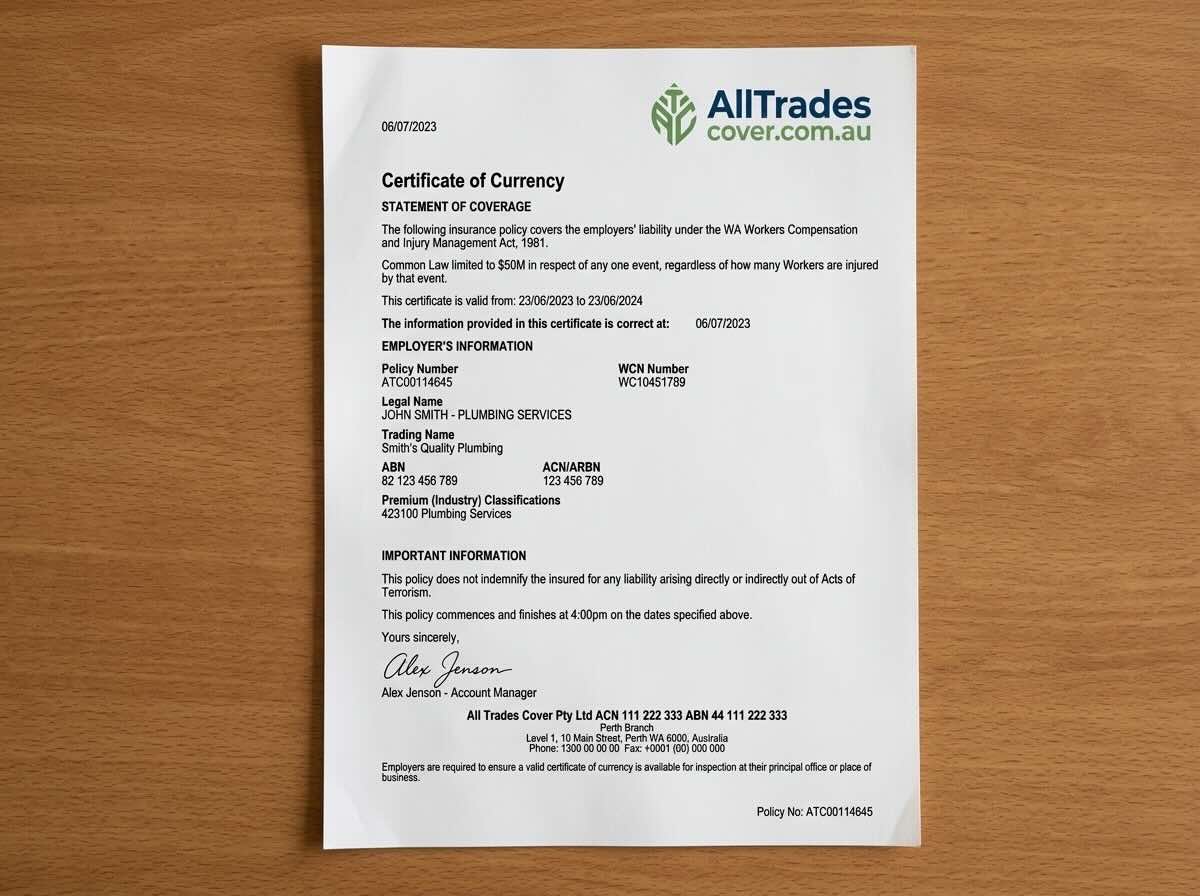
Can I Get a Certificate of Currency if I Pay Monthly?
Where the insurer has accepted the policy and cover is in force, a Certificate of Currency may be available regardless of whether the premium was paid upfront or through an accepted instalment or premium funding arrangement.
Certificate availability and wording remain subject to the insurer and policy. A Certificate of Currency does not override a later cancellation or confirm that cover remains in force after cancellation takes effect.
What Is the Difference Between Premium Funding and Insurer Instalments?
Insurer instalments involve paying the insurer or its payment provider according to an instalment schedule.
Insurance premium funding involves a separate finance provider funding the premium and the business repaying that provider under a funding agreement. The applicable fees, interest, cancellation terms and repayment conditions can differ.
Request a Public Liability Insurance Quote
All Trades Cover can help you compare available Public Liability Insurance options and explain the payment arrangements available for eligible policies.
If a monthly payment option is available, check the total cost, number of instalments, applicable fees and cancellation conditions before proceeding.
Request a Public Liability Insurance quote to provide your trade and business details for review.
General information: This information is general only and does not take into account your objectives, financial situation or needs. Before acting on it, consider its appropriateness for your circumstances and read the relevant policy wording, schedule and any applicable Product Disclosure Statement.
Cover is subject to policy terms, conditions, limits, exclusions and insurer acceptance. Payment options are subject to insurer or premium funding provider requirements and applicable terms. Cancellation, refund, repayment and reinstatement outcomes depend on the relevant insurance and funding arrangements and applicable law.